After October 7, peoplehood must evolve from shared buses and Shabbat tables to bold political action, defending democracy and a renewed Zionist vision
The post We backed Birthright. These are the next big ideas for the Jewish people appeared first on The Times of Israel.
Analysis & Context
After October 7, peoplehood must evolve from shared buses and Shabbat tables to bold political action, defending democracy and a renewed Zionist vision
The post We backed Birthright. These are the next big ideas for the Jewish people appeared first on The Times of Israel.
This article provides comprehensive coverage and analysis of current events.
After October 7, peoplehood must evolve from shared buses and Shabbat tables to bold political action, defending democracy and a renewed Zionist vision
The post We backed Birthright. These are the next big ideas for the Jewish people appeared first on The Times of Israel.
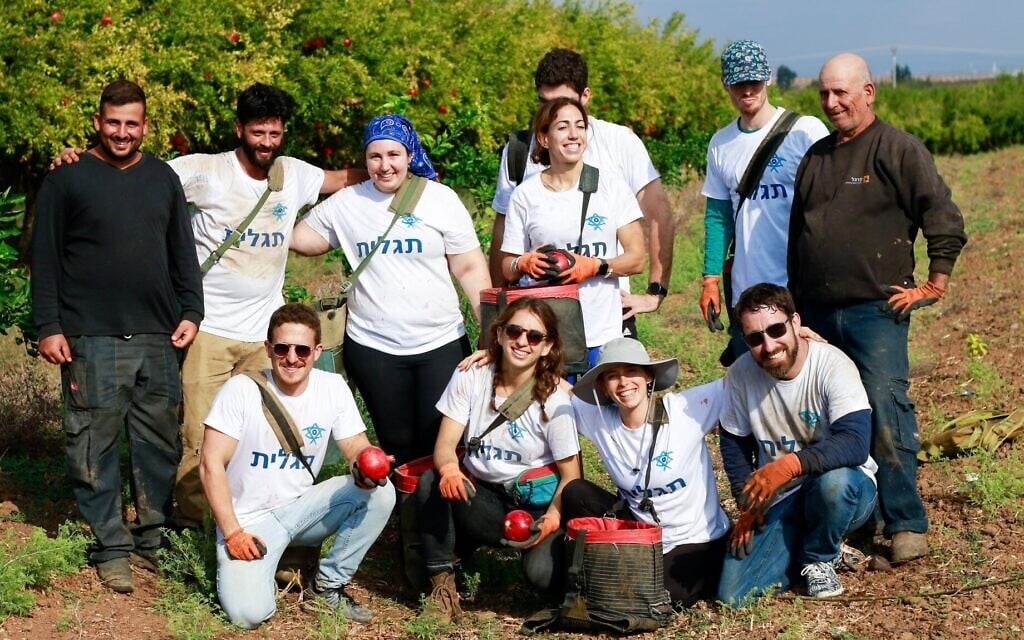
Advertisement Homepage From the blogs We backed Birthright. These are the next big ideas for the Jewish people After October 7, peoplehood must evolve from shared buses and Shabbat tables to bold political action, defending democracy and a renewed Zionist vision By Charles Bronfman and Jeffrey R. Solomon Today, 3:18 pm Edit Share Copy link Send by email Facebook X Whatsapp Telegram Bluesky Reddit Print Birthright participants volunteer in an agricultural community in Israel following the October 7, 2023, Hamas onslaught. (courtesy) JTA — For more than two decades, we have sat across the same tables — in Jerusalem conference rooms, Montreal board meetings, New York offices and plenty of late-night conversations — asking the same question: How do Jews feel more connected to one another? Through the Andrea and Charles Bronfman Philanthropies (ACBP), we helped launch Birthright Israel and more than a dozen other initiatives, driven by the belief that if you bring Jews together — on buses, in classrooms, around Shabbat tables — a sense of shared peoplehood can take root. From the beginning, our work has been guided by a simple idea: “the unity of the Jewish people, whose soul is in Jerusalem.” We have sought to cultivate a sense of Jewish Peoplehood — a global family bound not only by heritage, but by shared values and mutual responsibility. Today, that unity feels more fragile than ever. In this post-October 7 world, we believe it is urgent to take action to sustain Jewish Peoplehood, so that it can withstand rising antisemitism, political polarization, and threats to democracy both in Israel and across the diaspora. For decades, our philanthropy focused on connecting Jews through familiar avenues — Birthright trips, summer camps and cultural exchange programs that nurtured identity and community. Now, we believe it is time to go further: creating political networks, advocating for minority rights within Israel, and embedding Israeli culture more deeply in diaspora life. Our new agenda shifts from cultivating bonds to shaping policy, redefining responsibility and tackling the hard questions of Jewish Peoplehood in a time of global uncertainty. It wasn’t long ago that we believed we were in the golden age of the Jewish people. A set of unique circumstances allowed Jews to constantly say “shehechyanu” for gratitude for what they did. In the United States, the very lesson as documented by de Tocqueville in the 1830s was the concept of creating voluntary associations to achieve important purposes. Combining that ethos with the richness of Jewish values and the concept of Jewish community permitted us to build an unprecedented diaspora, perhaps the greatest since the times of Maimonides. Get The Times of Israel's Daily Edition by email and never miss our top stories Newsletter email address Get it By signing up, you agree to the terms Metaphorically, we believed that the creation and building of the State of Israel was our generation’s Third Temple. As Jonathan Woocher pointed out, this became our civil religion and organizational life became the new synagogue. Together, we created an unprecedented relationship between those in the family who are citizens of Israel and those of us choosing to remain in the rest of the world. In addition to the economic and quality of life measures, we shared values. The American Declaration of Independence and the Israeli Proclamation of Independence have far more in common than in difference. Both countries were aspirational societies, born in war, that could see beyond the immediate grievances to a time of justice and peace. We also learned how to use our respective places to fulfill Jewish and Zionist visions of freedom and fairness. Israel alone could not have freed Soviet or Ethiopian or Syrian Jewry. It took the combined resources of the American Jewish community and Israel to achieve these miracles of our time. However, democracy is under attack in Israel, the United States and many countries throughout the world. We know too well that when democracy is under attack, antisemitism is a woeful byproduct. Society became hyperpolitical; everything is seen in political terms, often right versus left. Sadly, the unifying vision is distorted by these political lenses, which, to us, often feel irrelevant to the core issues of Jewish Peoplehood. We love the Jewish people more than we dislike our political Others. Our intra-family debates require stepping back and looking at what unites us and what divides us. Advertisement More specifically, we believe that in this post-October 7 world, when democracy itself is being stress-tested and debated, we need to take a number of actions that ensure a dynamic Jewish people, whether in Beersheba, Berlin, Beijing or Boston. These actions include: More engagement: The secret sauce of Birthright Israel is the engagement of the young adult participants with their Israeli peers without curation. They discover for themselves how much they have in com