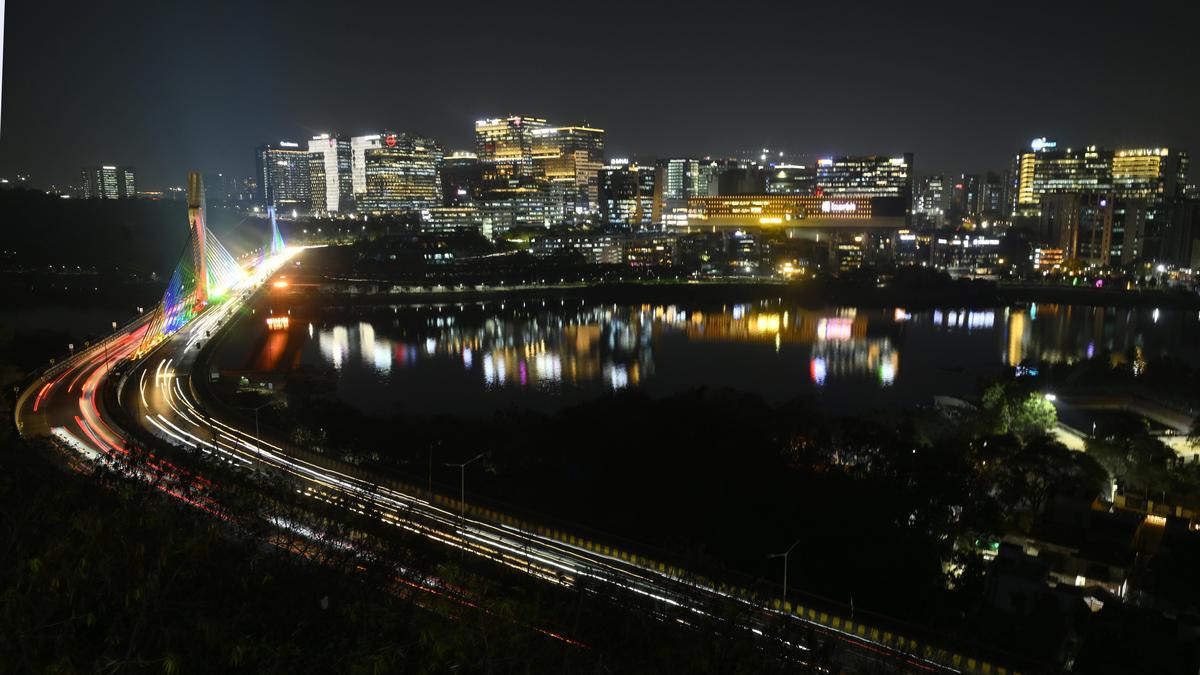
The gem-like appearance of Durgam Cheruvu hides a sinister, calculated assault. As evening lights and rooftop views sell the lake as a tourist spot, a multi-agency process seems to be killing it softly. One civic body lowers the water level to free up land, another lays a 10-metre-wide walking track on the exposed lake bed and yet another releases organically loaded effluents that fuel decay. Once a source of drinking water and part of Golconda Fort’s hydrological system, the lake is now trapped in a bureaucratic tic-tac-toe, writes Serish Nanisetti
Analysis & Context
The gem-like appearance of Durgam Cheruvu hides a sinister, calculated assault. As evening lights and rooftop views sell the lake as a tourist spot, a multi-agency process seems to be killing it softly. One civic body lowers the water level to free up land, another lays a 10-metre-wide walking track on the exposed lake bed and yet another releases organically loaded effluents that fuel decay. Once a source of drinking water and part of Golconda Fort’s hydrological system, the lake is now trapped in a bureaucratic tic-tac-toe, writes Serish Nanisetti This article provides comprehensive coverage and analysis of current events.
The gem-like appearance of Durgam Cheruvu hides a sinister, calculated assault. As evening lights and rooftop views sell the lake as a tourist spot, a multi-agency process seems to be killing it softly. One civic body lowers the water level to free up land, another lays a 10-metre-wide walking track on the exposed lake bed and yet another releases organically loaded effluents that fuel decay. Once a source of drinking water and part of Golconda Fort’s hydrological system, the lake is now trapped in a bureaucratic tic-tac-toe, writes Serish Nanisetti