Karen Kerr was previously told she would never walk again after suffering brain damage but thanks to her son she can and lives fully independently
Analysis & Context
Karen Kerr was previously told she would never walk again after suffering brain damage but thanks to her son she can and lives fully independently Mother told she would never walk again regains independence with son’s help. Stay informed with the latest developments and expert analysis on this important story.
Karen Kerr was previously told she would never walk again after suffering brain damage but thanks to her son she can and lives fully independently
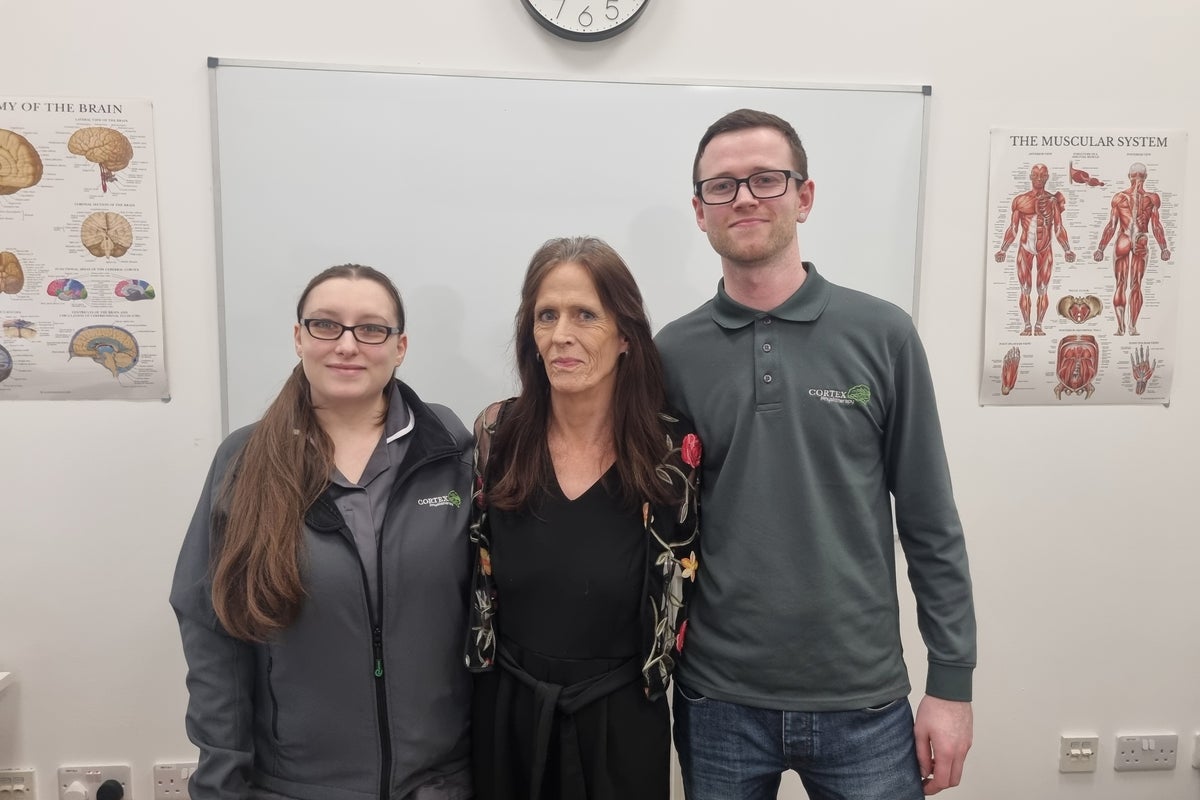
LifestyleHealth & FamiliesMother told she would never walk again regains independence with son’s helpKaren Kerr was previously told she would never walk again after suffering brain damage but thanks to her son she can and lives fully independentlyRyan McDougall Sunday 15 February 2026 19:01 ESTBookmarkCommentsGo to commentsBookmark popoverRemoved from bookmarksClose popoverRelated: Brain damaged mother defies odds and completes charity walkYour support helps us to tell the storyRead moreSupport NowFrom reproductive rights to climate change to Big Tech, The Independent is on the ground when the story is developing. Whether it's investigating the financials of Elon Musk's pro-Trump PAC or producing our latest documentary, 'The A Word', which shines a light on the American women fighting for reproductive rights, we know how important it is to parse out the facts from the messaging.At such a critical moment in US history, we need reporters on the ground. Your donation allows us to keep sending journalists to speak to both sides of the story.The Independent is trusted by Americans across the entire political spectrum. And unlike many other quality news outlets, we choose not to lock Americans out of our reporting and analysis with paywalls. We believe quality journalism should be available to everyone, paid for by those who can afford it.Your support makes all the difference.Read moreA mother who was told she would never walk again because of a brain injury has described how her son’s physiotherapy clinic restored her independence.In January 2023, Karen Kerr, 58, experienced a sudden onset of symptoms, including difficulty using her hands, an inability to stand, and slurred speech. Her son, Iain Legge, 30, immediately suspected a stroke, but investigations soon revealed she had sustained brain damage due to a genetic condition.Mr Legge, who lives in East Ayrshire, is the director of Cortex Physiotherapy, a clinic he co-founded in 2024 with his partner, physiotherapist Dionne Harvey, 33. At the time of her illness, Ms Kerr had been living in Dorset for a decade.Recalling the terrifying initial moments, Mr Legge said: "I immediately thought she’s having a stroke, so we got an ambulance down to her house and she was taken to hospital. They investigated what had happened, and it was found pretty early on that there was brain damage, and they later found that my mum had been living with a condition called haemochromatosis."Haemochromatosis is a genetic disorder that impairs the body’s ability to process iron, leading to a dangerous build-up. This iron overload can cause stroke-like symptoms, as seen in Ms Kerr, and can severely damage organs such as the liver, pancreas, joints, and heart. If left untreated, the condition can be fatal.Ms Kerr’s health deteriorated dramatically. She became unable to stand or sit upright, lost significant weight, reaching just over six stone at her lowest point, and spent four months in hospital. Her condition necessitated four daily care visits from at least two carers, and she was confined to her room – a "micro-environment" where all her needs, including her bed and toilet, were met.open image in galleryDionne Harvey, co-founder of Cortex Physiotherapy, Karen Kerr and Iain Legge, fellow co-founder of the practise and Ms Kerr's son at Cortex Physiotherapy in Kilmarnock (Ryan McDougall/PA Wire)Ms Harvey explained the medical impact: "She had a lot of built-up iron in her system. Other toxins which were then not getting filtered by the liver were building up in the bloodstream. Those toxins in the blood were then reaching the brain, and that is what was causing the damage."Hospital staff began planning for Ms Kerr to enter a 24-hour care facility due to her severe deterioration. Mr Legge recounted: "The hospital was going down the route of trying to get my mum into a 24-hour care facility, because she deteriorated so far that she couldn’t hold a sitting balance. Obviously, we didn’t want that."Defying medical advice that their efforts would be futile, the couple pushed for an alternative. After four months, Ms Kerr was discharged, still with minimal sitting balance. "Everything she had was in one room – the bed, the commode – she couldn’t leave that room," Mr Legge added.In May 2024, Ms Kerr was moved back to Scotland, where her son and his partner began her intensive treatment. Her recovery involved a number of different therapies, including neuroplasticity training, where the brain rewires itself through repeating small tasks, eventually leading to accomplishing functions previously lost.Ms Kerr reflected on her journey: "To begin with, I just wanted to go to Asda or Tesco with somebody and walk, and then I went Christmas shopping last year. Once it was explained to me why I was having trouble, I felt that I could recover, instead of being written off."She light-heartedly added: "The hardest bit about recovery was Iain telling me what to do. But as a mother, I kept thinking, ‘I can’t