
Anthropic just released a mobile version of Claude Code called Remote Control
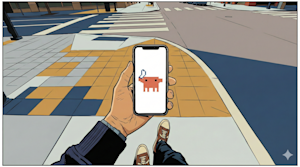
Claude Code has become increasingly popular in the first year since its launch, and especially in recent months, as developers and non-technical users alike flock to AI unicorn Anthropic's hit coding agent to create full applications and websites in days, on their own, that would've taken months and technical teams without. It's not a stretch to say it helped spur the "vibe coding" boom — using plain English instead of programming languages to write software.But it's all been restricted to the desktop Claude Code apps and Terminal command-line interfaces and integrated development environments (IDEs) — until today. Now, Anthropic has added a new mode, Remote Control, that lets users issue commands to Claude Code from their iPhone and Android smartphones — starting with subscribers to Anthropic's Claude Max ($100-$200 USD monthly) subscription tier.Anthropic posted on X saying Remote Control will also make its way to Claude Pro ($20 USD monthly) subscribers in the future.The mobile command centerAnnounced earlier today by Claude Code Product Manager Noah Zweben, Remote Control is a synchronization layer that bridges local CLI environments with the Claude mobile app and web interface. The feature allows developers to initiate a complex task in their terminal and maintain full control of it from a phone or tablet, effectively decoupling the AI agent from the physical workstation.Currently, Remote Control is available as a Research Preview for subscribers on the Claude Max tier. While access for Claude Pro ($20/month) users is expected shortly, the feature remains a high-end tool for power users and is notably absent from Team or Enterprise plans during this initial phase. To access the feature, users must follow this guide and update to Claude version 2.1.52 and execute the command claude remote-control or use the in-session slash command /rc. Once active, the terminal displays a QR code that, when scanned, opens a responsive, synchronized session in the Claude mobile app.Less screen time, more IRL time: philosophy of flowThe messaging behind the release centers on the preservation of a developer's "flow state." In his announcement, Zweben framed the update as a lifestyle upgrade rather than just a technical one, encouraging users to "take a walk, see the sun, walk your dog without losing your flow."This "Remote Control" is not a cloud-based replacement for local development, but a portal into it. According to official documentation, the core value is that "Claude keeps running on your machine, and you can control the session from the Claude app." This ensures that local context—filesystem access, environment variables, and Model Context Protocol (MCP)servers—remains active and reachable even if the user is miles away from their desk.Architecture, security, and setupClaude Code Remote Control functions as a secure bridge between your local terminal and Anthropic’s cloud interface, which provides the Anthropic AI models, Opus 4.6 and Sonnet 4.6, that power Claude Code.When you run the command, your desktop machine initiates an outbound connection to Anthropic’s API for serving the models — meaning you aren't opening any "inbound" ports or exposing your computer to the open web. Instead, your local machine polls the API for instructions. When you visit the session URL or use the Claude app, you are essentially using those devices as a "remote window" to view and command the process still running on your computer. Your files and MCP servers never leave your machine; only the chat messages and tool results flow through the encrypted bridge.To get started, ensure you are on a Pro or Max plan and have authenticated your CLI using the /login command. Simply navigate to your project directory and run claude remote-control to initialize the session. The terminal will then generate a unique session URL and a QR code (toggleable via the spacebar) for your mobile device. Once you open that link on your phone, tablet, or another browser, the two surfaces stay in perfect sync—allowing you to start a task at your desk and continue it from the couch while maintaining full access to your local filesystem and project configuration.From brittle community hacks to official solutionPrior to this official release, the developer community went to great lengths to "hack" mobile access into their terminal-based workflows. Power users frequently relied on a patchwork of third-party tools like Tailscale for secure tunneling, Termius or Termux for mobile SSH access, and Tmux for session persistence.Some developers even built complex custom WebSocket bridges just to get a responsive mobile UI for their local Claude sessions. These unofficial solutions, while functional, were often brittle and prone to timeout issues. Remote Control replaces these workarounds with a native streaming connection that requires no port forwarding or complex VPN configurations. It also includes automatic reconnection logic: if a user’s laptop sleeps or the network drops, the session remains alive in the background and reconnects as soon as the host machine is back online.The $2.5 billion-dollar agentThe launch of Remote Control serves as an "escalation of force" in what has become a dominant business for Anthropic. As of February 2026, Claude Code has hit a $2.5 billion annualized run rate — a figure that has more than doubled since the start of the year alone.Claude Code is currently experiencing its "ChatGPT moment," surging to 29 million daily installs within Visual Studio Code. Its efficiency is no longer theoretical; recent analysis suggests that 4% of all public GitHub commits worldwide are now authored by Claude Code. By extending this power to mobile, Anthropic is further entrenching its lead in the "agentic" coding space, moving beyond simple autocomplete to a world where the AI acts as an autonomous collaborator.Future outlook: vibe coding everywhereThe move toward mobile terminal control signals a broader shift in the software market. We are entering an era where AI tools are writing roughly 41% of all code. For developers, this translates to a migration from "line-by-line" typing to "strategic oversight."This trend is likely to accelerate as mobile-tethered agents become the norm. The barrier between "idea" and "production" is collapsing, enabling a single developer to manage complex systems that previously required entire DevOps teams. This shift has already rattled the broader tech market; shares of major cybersecurity firms like CrowdStrike and Datadog fell as much as 11% following the launch of Claude Code's automated security scanning features.As Claude Code moves from the desk to the pocket, the definition of a "software engineer" is being rewritten. In the coming year, the industry may see a surge in "one-person unicorns"—startups built and maintained almost entirely via mobile agentic commands—marking the end of the manual coding era as we knew it.
💡Analysis & Context
Claude Code has become increasingly popular in the first year since its launch, and especially in recent months, as developers and non-technical users Claude Code has become increasingly popular in the first year since its launch, and especially in recent months, as developers and non-technical users Monitor developments in Anthropic for further updates.
📋 Quick Summary
Claude Code has become increasingly popular in the first year since its launch, and especially in re
Claude Code has become increasingly popular in the first year since its launch, and especially in recent months, as developers and non-technical users alike flock to AI unicorn Anthropic's hit coding agent to create full applications and websites in days, on their own, that would've taken months and technical teams without. It's not a stretch to say it helped spur the "vibe coding" boom — using plain English instead of programming languages to write software.But it's all been restricted to the desktop Claude Code apps and Terminal command-line interfaces and integrated development environments (IDEs) — until today. Now, Anthropic has added a new mode, Remote Control, that lets users issue commands to Claude Code from their iPhone and Android smartphones — starting with subscribers to Anthropic's Claude Max ($100-$200 USD monthly) subscription tier.Anthropic posted on X saying Remote Control will also make its way to Claude Pro ($20 USD monthly) subscribers in the future.The mobile command centerAnnounced earlier today by Claude Code Product Manager Noah Zweben, Remote Control is a synchronization layer that bridges local CLI environments with the Claude mobile app and web interface. The feature allows developers to initiate a complex task in their terminal and maintain full control of it from a phone or tablet, effectively decoupling the AI agent from the physical workstation.Currently, Remote Control is available as a Research Preview for subscribers on the Claude Max tier. While access for Claude Pro ($20/month) users is expected shortly, the feature remains a high-end tool for power users and is notably absent from Team or Enterprise plans during this initial phase. To access the feature, users must follow this guide and update to Claude version 2.1.52 and execute the command claude remote-control or use the in-session slash command /rc. Once active, the terminal displays a QR code that, when scanned, opens a responsive, synchronized session in the Claude mobile app.Less screen time, more IRL time: philosophy of flowThe messaging behind the release centers on the preservation of a developer's "flow state." In his announcement, Zweben framed the update as a lifestyle upgrade rather than just a technical one, encouraging users to "take a walk, see the sun, walk your dog without losing your flow."This "Remote Control" is not a cloud-based replacement for local development, but a portal into it. According to official documentation, the core value is that "Claude keeps running on your machine, and you can control the session from the Claude app." This ensures that local context—filesystem access, environment variables, and Model Context Protocol (MCP)servers—remains active and reachable even if the user is miles away from their desk.Architecture, security, and setupClaude Code Remote Control functions as a secure bridge between your local terminal and Anthropic’s cloud interface, which provides the Anthropic AI models, Opus 4.6 and Sonnet 4.6, that power Claude Code.When you run the command, your desktop machine initiates an outbound connection to Anthropic’s API for serving the models — meaning you aren't opening any "inbound" ports or exposing your computer to the open web. Instead, your local machine polls the API for instructions. When you visit the session URL or use the Claude app, you are essentially using those devices as a "remote window" to view and command the process still running on your computer. Your files and MCP servers never leave your machine; only the chat messages and tool results flow through the encrypted bridge.To get started, ensure you are on a Pro or Max plan and have authenticated your CLI using the /login command. Simply navigate to your project directory and run claude remote-control to initialize the session. The terminal will then generate a unique session URL and a QR code (toggleable via the spacebar) for your mobile device. Once you open that link on your phone, tablet, or another browser, the two surfaces stay in perfect sync—allowing you to start a task at your desk and continue it from the couch while maintaining full access to your local filesystem and project configuration.From brittle community hacks to official solutionPrior to this official release, the developer community went to great lengths to "hack" mobile access into their terminal-based workflows. Power users frequently relied on a patchwork of third-party tools like Tailscale for secure tunneling, Termius or Termux for mobile SSH access, and Tmux for session persistence.Some developers even built complex custom WebSocket bridges just to get a responsive mobile UI for their local Claude sessions. These unofficial solutions, while functional, were often brittle and prone to timeout issues. Remote Control replaces these workarounds with a native streaming connection that requires no port forwarding or complex VPN configurations. It also includes automatic reconnection logic: if a user’s laptop sleeps or the network drops, the session remains alive in the background and reconnects as soon as the host machine is back online.The $2.5 billion-dollar agentThe launch of Remote Control serves as an "escalation of force" in what has become a dominant business for Anthropic. As of February 2026, Claude Code has hit a $2.5 billion annualized run rate — a figure that has more than doubled since the start of the year alone.Claude Code is currently experiencing its "ChatGPT moment," surging to 29 million daily installs within Visual Studio Code. Its efficiency is no longer theoretical; recent analysis suggests that 4% of all public GitHub commits worldwide are now authored by Claude Code. By extending this power to mobile, Anthropic is further entrenching its lead in the "agentic" coding space, moving beyond simple autocomplete to a world where the AI acts as an autonomous collaborator.Future outlook: vibe coding everywhereThe move toward mobile terminal control signals a broader shift in the software market. We are entering an era where AI tools are writing roughly 41% of all code. For developers, this translates to a migration from "line-by-line" typing to "strategic oversight."This trend is likely to accelerate as mobile-tethered agents become the norm. The barrier between "idea" and "production" is collapsing, enabling a single developer to manage complex systems that previously required entire DevOps teams. This shift has already rattled the broader tech market; shares of major cybersecurity firms like CrowdStrike and Datadog fell as much as 11% following the launch of Claude Code's automated security scanning features.As Claude Code moves from the desk to the pocket, the definition of a "software engineer" is being rewritten. In the coming year, the industry may see a surge in "one-person unicorns"—startups built and maintained almost entirely via mobile agentic commands—marking the end of the manual coding era as we knew it.
Share:
Original Source:
Read full article at sourceHelp us improve this article. Share your feedback and suggestions.

